Brake repair in Detroit is rarely just pads, because road salt attacks the steel lines and the caliper hardware long before the friction wears out.
At a glance
- Pads and rotors on most cars finish in about two hours
- Rusted brake lines are the number one Michigan brake failure
- A soft pedal that sinks is a leak, not worn pads
- Labor is $150 an hour and parts are quoted before we start
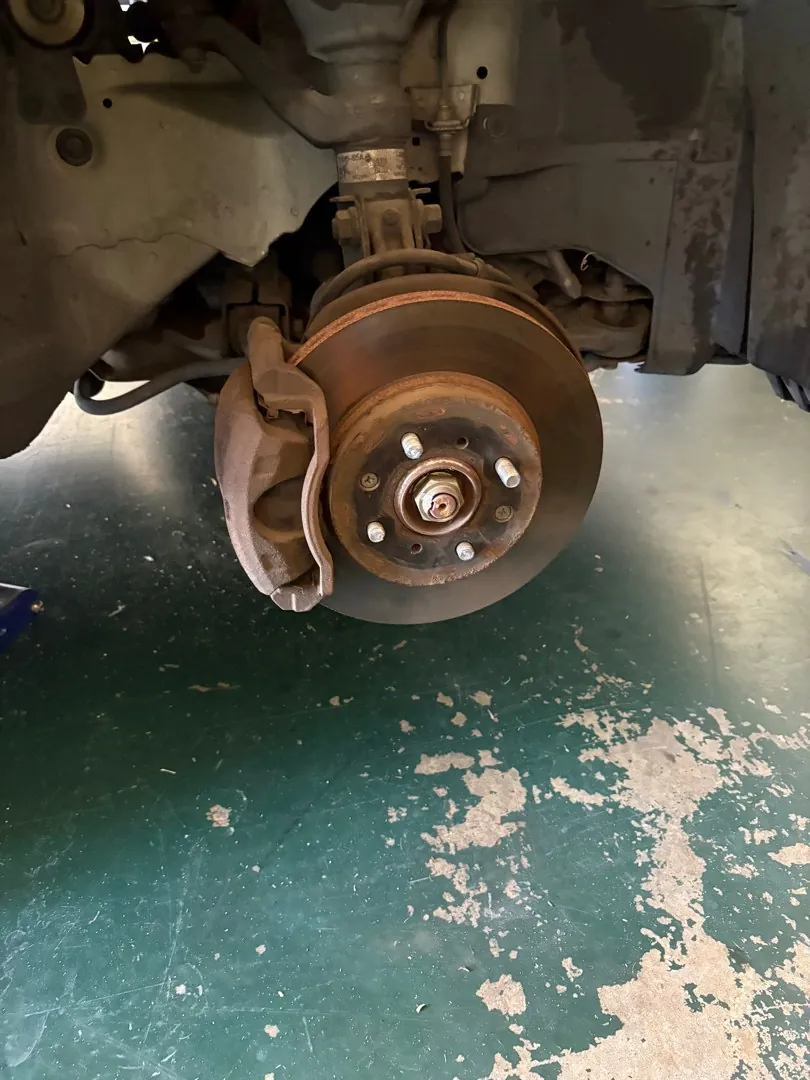
Salt gets thrown on these roads from November to March and it does not wash off the underside of a car. It sits on the steel brake lines and works through them from the outside in. A line can look fine and still be paper thin.
That is why a Michigan brake job gets inspected as a system. We look at the lines, the flex hoses, the caliper slides and the parking brake cables, not only the pad thickness. Photos of all of it land on your phone.
A grinding noise means the pad is gone and the rotor is being cut by steel. That is still the cheap version. A pedal that slowly sinks to the floor while you hold it is a leak somewhere in the system and that car should not be driven to a shop.
Most pad and rotor work runs about two hours a pair. Lines take longer because every fitting on a rusted car fights back, and we flare new line rather than sell you a whole assembly you do not need.
Common questions
How do I know if it is the lines or the pads
Noise is pads. A pedal that feels soft or slowly drops is fluid escaping. If the pedal is soft, stop driving it and text us.
Can you do brakes in my driveway in winter
Yes. Brakes are the most common winter driveway job we run. The van carries heat, light and a canopy.
Do you use cheap pads
You see the part and the brand on the quote before you approve it. If you want a better pad we price both.
Tell us what the car is doing
Text a photo and your location. You get a real answer from a real person, whatever the hour, and a written quote before anybody touches anything.