Pothole damage in Detroit shows up as a pull, a shake or a new clunk, and the cheapest outcome is finding it before the tire wears out.
At a glance
- Freeze and thaw opens new holes every spring
- A pull to one side after a hit often means a bent part
- Clunking over bumps is usually a link, a bushing or a strut
- Worn steering parts eat a set of tires in a few thousand miles
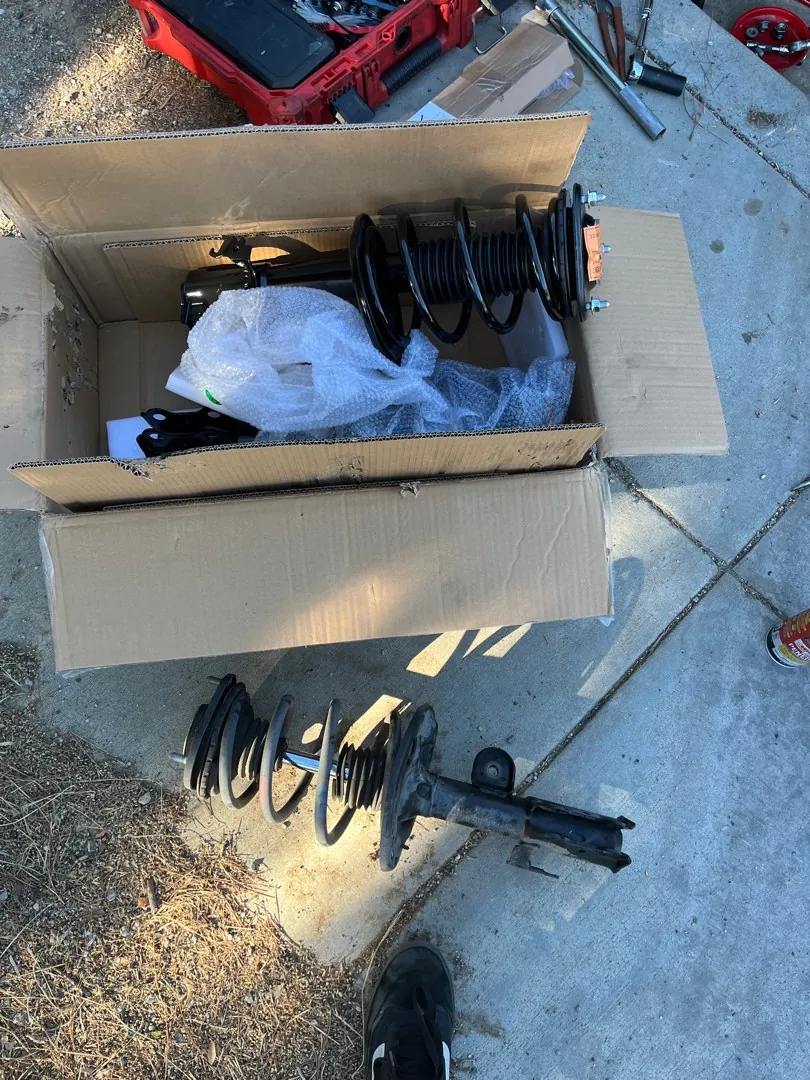
Water gets into a crack, freezes, expands and lifts the pavement. Then it thaws and the piece breaks out. Michigan does that cycle dozens of times a winter, which is why the roads here open up every March.
The hit that gets you is rarely the loud one. A wheel can bend just enough to shake at 60, a strut can lose its damping quietly, and a control arm bushing can tear without a single noise on a smooth road.
Listen for a clunk over expansion joints and a pull that was not there last week. Look for a tire wearing on one edge. Those three cover most of what we find, and all three cost more the longer they run because a loose part destroys the tire attached to it.
We check the whole corner rather than only the part you noticed. Struts, links, arms, tie rods, wheel bearings and the wheel itself. Every worn part gets a photo so you are not taking our word for it.
Common questions
I hit a pothole and the wheel shakes now
That is usually a bent wheel or a thrown balance weight. It is a cheap check and an expensive thing to ignore.
Do you do alignments
We do the mechanical repair and set toe where the job allows. A full rack alignment goes to a shop with the machine and we arrange it.
How long do struts take
A pair is usually three to four hours. Rusted hardware in this state can add to that and we say so before we start.
Tell us what the car is doing
Text a photo and your location. You get a real answer from a real person, whatever the hour, and a written quote before anybody touches anything.