The six signs of worn brake pads are a squeal, a grind, a pad under 1/4 inch, a dash light, a shake when you brake, and wheels that suddenly stay clean. A squeal means book it soon. A grind means the pad is likely gone. A soft pedal or a puddle is not a pad problem at all, and that car should not be driven.
Plain Answer
- Wagner Brake sets the line at 1/4 inch, about 6.4 mm
- New pads run 10 to 12 mm, and Allstate puts replacement at 3 mm
- At 1/4 inch you have used 36 to 47 percent of the pad, by plain math on those numbers
- A look through the spokes shows the outer pad only, and the inner pad can be the thin one
- Pad prices run a median $180 an axle at 197 shops that post them
1/4 inch. That is about 6.4 mm, and it is the line Wagner Brake, a brake parts maker, gives for booking new pads. Thinner than that and it is time for an appointment. We put that number beside the other ones that get quoted, then did the math on how many miles each thickness leaves you. Then we added the part most lists skip, which is the pad you cannot see on a car that lives on salted roads.
Go Straight To
About 9 min read
The Six Signs, Loudest First
Six signs point at the pads themselves. Most drivers notice them in about this order.
- A high squeal. Many pads carry a small metal tab that touches the rotor when the pad gets thin. The Mazda manual calls it a screeching noise and says to see a repairer as soon as possible. The Kia manual says it may come and go, or come with every press of the pedal.
- A metal grind or growl. Wagner says this typically means the pads have worn through and are grinding into the rotors. You have missed the cheap stage.
- A thin pad. Under 1/4 inch is the line. Wagner also points to the groove down the middle of the pad. If it is gone or just barely there, the pad is near the end. The steps to look are further down.
- A dash light. Some cars use a sensor and a light in place of the squeal, per Wagner. So a quiet car can still have thin pads.
- A shake. Wagner lists a shake in the brake pedal or steering wheel. Worn rotors can do this too, so ask for both to be measured.
- Wheels that stay clean. Wagner notes that cleaner wheels can be a sign, as the brake dust fades.
That last one surprises people. If your front wheels used to turn gray in a week and now they do not, go look at the pads.
Signs That Are Not the Pads
Most top lists put every brake symptom in one pile. That is a mistake, because two of these mean stop driving, and two mean nothing at all. Sort them before you panic or before you shrug.
| What you notice | What it usually means | What to do |
|---|---|---|
| Squeal that stays | Wear tab on the rotor | Book it this week |
| Grinding | Pad worn through to steel | Get it looked at today |
| Soft pedal that sinks | Fluid or a leak, not pad wear | Do not drive it |
| Puddle by a wheel | Possible brake fluid leak | Do not drive it |
| Pull to one side | Uneven lining wear or a fluid problem | Book it this week |
| Squeak on a damp day | Humidity, per Mazda, not a fault | Watch it. Check if it stays |
| Pulse on a hard stop | Anti lock brakes at work | Keep pressing hard, do not pump |
The puddle and the pull come from Performance Honda's list, which also ties a pedal near the floor to air, low fluid, thin pads or a hydraulic problem. The rule on the brake repair page is simpler. A pedal that slowly sinks while you hold it is a leak until proven otherwise, and that car does not get driven to a shop. On a slick Detroit road, the buzz in the pedal is usually the good news. The Kia manual says that feeling is normal and means the system is active, and says not to pump.
How Thick Is Too Thin
You will see three numbers online, and they are not really fighting. They answer different questions. New pads are often 10 to 12 mm, and replacement is recommended at 3 mm, per Allstate, which cites AutoZone and notes some experts say go sooner, near 6 mm. Wagner's 1/4 inch is that sooner number. It is the time to book, and 3 mm is the time you ran out of room.
The last number comes from trucks. The federal rule at 49 CFR 393.47 says a commercial vehicle with hydraulic disc brakes cannot run under 1/16 inch, which is 1.6 mm. That rule does not cover your personal car. It does show how close to the steel the legal floor sits on a work truck. Michigan's own MCL 257.705 gives no pad number. It says brakes must be adequate to stop and hold the car.
How Many Miles You Have Left
Nobody prints this part, and the math is plain. Allstate says pads may last 30,000 to 35,000 miles in the city and up to 80,000 on the highway, citing Bridgestone. Take a 12 mm pad worn down to 3 mm. In the 30,000 mile case, that is 0.3 mm gone every 1,000 miles. In the 80,000 mile case, it is about 0.11 mm.
| Pad left | Share used | City miles to 3 mm | Highway miles to 3 mm |
|---|---|---|---|
| 1/4 inch (6.4 mm) | 47% | about 11,000 | about 30,000 |
| 5 mm | 58% | about 6,700 | about 18,000 |
| 4 mm | 67% | about 3,300 | about 8,900 |
| 3 mm | 75% | none | none |
The table is plain math on Allstate's figures, worked out for this page. It is a worked example for one 12 mm pad with even wear, not a promise for your car. On a 10 mm pad, the 1/4 inch mark comes at 36 percent used. Two things stand out. The 1/4 inch line is not an emergency, and that is why it is a good time to book. And stop and go driving on the Lodge or Woodward belongs closer to the city column, so 4 mm can mean only a few months for a daily commuter.
The Pad You Cannot See on a Salted Car
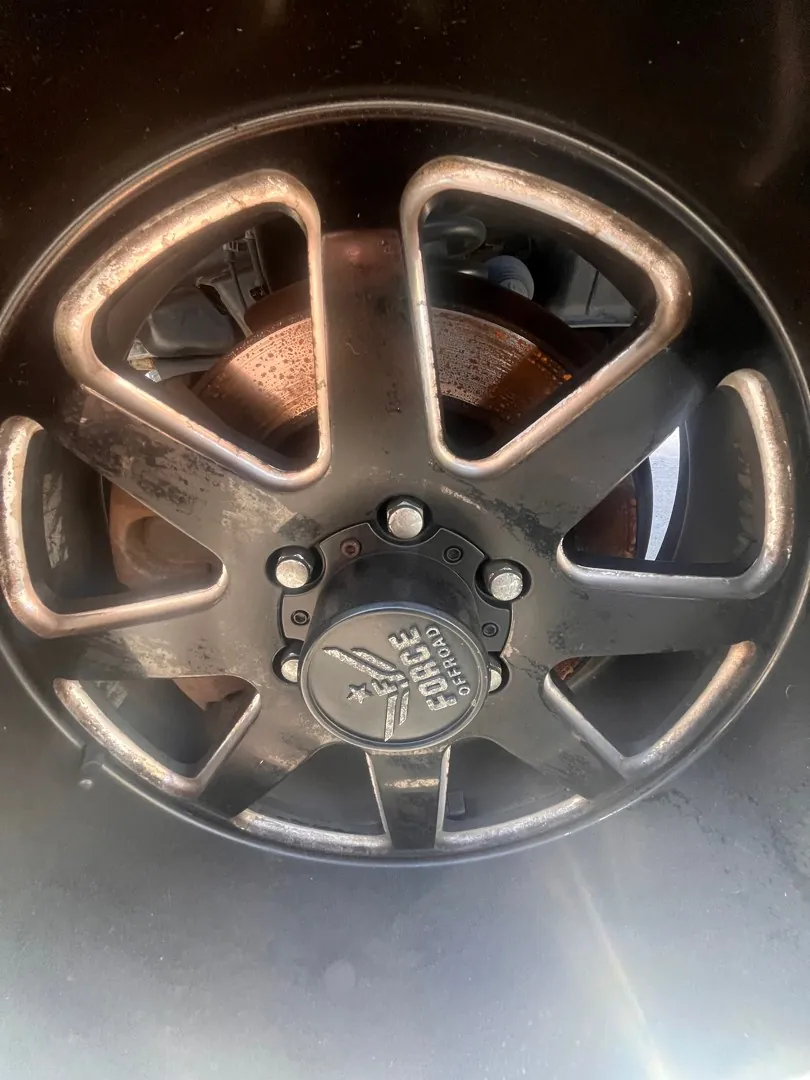
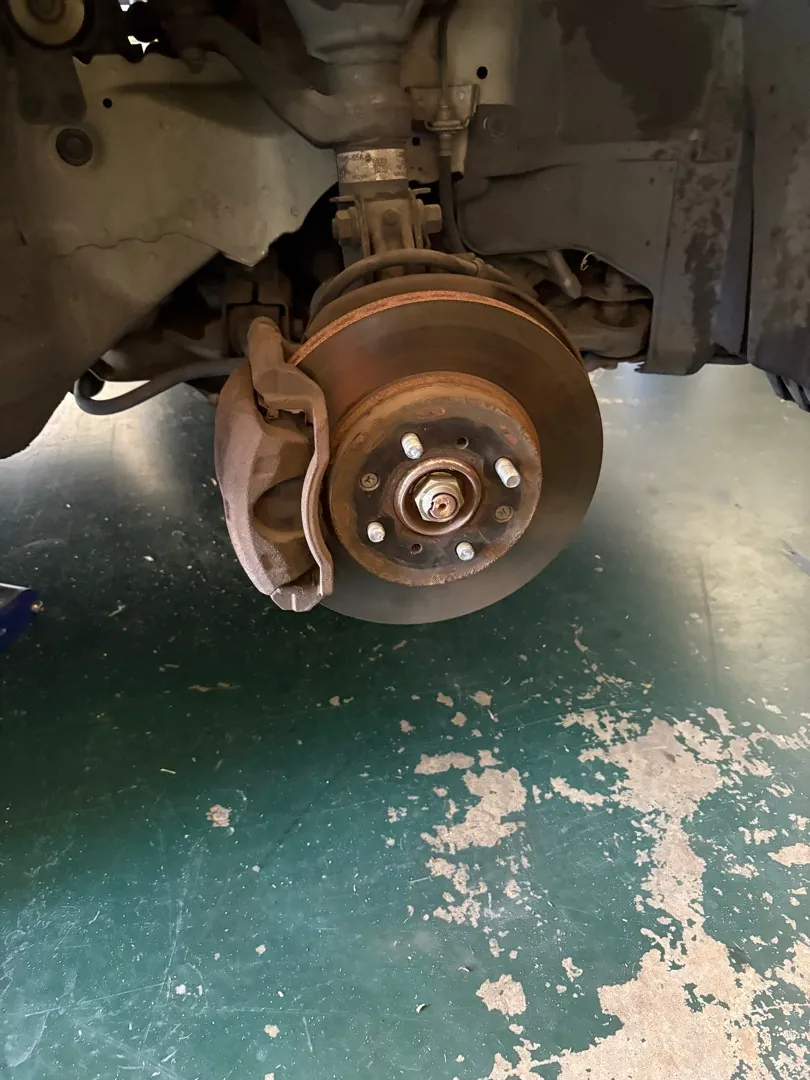
This is where a Detroit car parts ways with the usual advice. Every guide tells you to look through the wheel. That check is real and it is free. It also shows you the outer pad only. The inner pad sits on the back of the rotor, out of sight.
And the two pads do not always wear alike. Guidance from Delphi Technologies in Professional Motor Mechanic reads the pattern like this.
- Outer pad thinner. The mounting hardware is making the caliper seize. Delphi names seized sliders, guide pins and dry bolts.
- Inner pad thinner. The caliper piston is hanging up and not going back to rest. Delphi says damage or corrosion to the caliper can do this, or a master cylinder problem.
- Pad worn at a slant. A seized slider on one side of the pad can do this.
YourMechanic tells the same story, and lists corrosion from wet conditions as a cause of inner pad wear. Now think about where these cars live. Michigan is on the list of 20 states and Washington, D.C. in the federal rust advisory reported by MotorWeek, which asks owners to wash often and get brakes inspected during cold weather. Salt spray gets to the same corner of the car where the caliper lives.
So on a car that has seen a few Michigan winters, a thick outer pad does not clear the brakes. It clears half of them. Two things follow.
- Get the wheel off once a year. Before the salt trucks come out is the best time. Tire rotations are an easy excuse.
- Do not stop at new pads. If one pad is much thinner than its partner, the pads are the symptom. Delphi's fix is to service or replace the hardware, and to check the piston boot and guide pin hole. Skip that, and new pads can wear the same way.
Rust is also why the rest of the system deserves a look on the same visit. Read the road salt car wash schedule to slow it down, and see our rust and salt repair page for what it costs when it gets ahead of you.
Check Your Pads at Home
- Park on level ground and wait. Wagner says let the brakes cool for at least an hour.
- Use a flashlight. Look through the wheel at the pad against the rotor. The steel backing plate is the part that does not wear, so do not count it.
- Hold a ruler near the wheel. You only need a rough read of 1/4 inch. If the pad looks thinner than that, book it.
- Check both sides of the car. A big difference left to right is worth a question.
- Listen with the radio off. Roll slowly with the windows down and press the pedal lightly.
- Take a photo. Send it to your shop with the year, make and model.
What New Pads Cost
Brake pads run a median $180 an axle at the 197 shops that post that price online, with the middle half between $135 and $259, per Data for Trades. The same study shows a median of $312 for pads and rotors. That gap of about $130 is a fair guess at what waiting past the squeal can add, since a grind can cut the rotor.
Our number works like this. Labor is $150 an hour, per our price list, and most pad and rotor work runs about two hours a pair. That is about $300 in labor plus parts, on a written quote before we start. We do it in your driveway, and we check the hidden pad, the slides and the lines while the wheel is off, with photos sent to your phone. If your car has any of the signs above, text us the year, make and model.
Customer Mailbag
What are signs of worn brake pads?
A high squeal, a metal grind, a pad under 1/4 inch, a brake pad light on some cars, a shake in the pedal or wheel when you brake, and wheels that collect less dust than they used to. Wagner Brake lists all six.
What does a worn brake pad sound like?
First a high squeal that may come and go, or happen each time you press the pedal. Kia describes it that way in its manual. Later a metal grind or growl, which Wagner says typically means the pad has worn through into the rotor.
Can I still drive if my brake pads are worn?
A squeal means book it now, not next season. Kia's manual says do not keep driving on worn pads, since that can damage the system and lead to costly repairs. Mazda says worn pads can be dangerous and could lead to brake failure.
How long will brakes last when grinding?
Nobody can give you a safe number. Grinding typically means the pad has worn through, per Wagner, so the steel is now cutting the rotor. Stop driving it for anything you can put off, and get it looked at that day.
What destroys brake pads?
Stuck hardware is the quiet one. Delphi Technologies, in Professional Motor Mechanic, ties a thin outer pad to seized sliders and a thin inner pad to a piston that hangs up. YourMechanic adds that a parking brake left partly on can warp a pad.
How can you tell if brake pads are bad without taking the wheel off?
Use a flashlight and look through the spokes at the pad, as Wagner suggests. If it looks under 1/4 inch, get it checked. A good look only clears the outer pad, so the inner pad still needs the wheel off.
Data Behind This
Wagner Brake, How to Check Brake Pads. https://www.wagnerbrake.com/technical/parts-matter/automotive-repair-and-maintenance/how-to-check-brake-pads.html
Allstate, How to Check Brake Pads for Wear. https://www.allstate.com/resources/car-insurance/how-to-check-brake-pads
Professional Motor Mechanic, Brake wear, guidance from Delphi Technologies, May 28, 2018. https://pmmonline.co.uk/technical/brake-wear/
YourMechanic, How to Recognize Brake Pad Wear Patterns, July 25, 2016. https://www.yourmechanic.com/article/how-to-recognize-brake-pad-wear-patterns-by-cheryl-knight
Mazda owner's manual, Brake Pad Wear Indicator. https://owners-manual.mazda.com/gen/en/cx-5/cx-5_8hy2ee19l/contents/05050105.html
Kia owner's manual, Disc brakes wear indicator. https://ownersmanual.kia.com/full_webhelp/ON/2024/en_US/topics/t00338.html
Kia owner's manual, Anti lock Brake System. https://ownersmanual.kia.com/full_webhelp/ON/2024/en_US/topics/t00347.html
Performance Honda, 9 Early Warning Signs You Need New Brakes, November 17, 2022. https://www.performancehondastore.com/blog/signs-you-need-new-brake-pads/
MotorWeek, NHTSA Warns of Corrosion on Brakes, April 10, 2015. https://motorweek.org/this_just_in/nhtsa-warns-of-corrosion-on-brakes
Federal Motor Carrier Safety rule, 49 CFR 393.47. https://www.ecfr.gov/current/title-49/section-393.47
Michigan Legislature, MCL 257.705, brake equipment. https://www.legislature.mi.gov/Laws/MCL?objectName=mcl-257-705
Tell us what the car is doing
Text a photo and your location. You get a real answer from a real person, whatever the hour, and a written quote before anybody touches anything.