On ice at 10 mph, a car on winter tires stopped in 21 feet, 2 inches. On all season tires it took 39 feet, 10 inches. Those are the numbers the Michigan State Police use to tell drivers to switch. In Detroit, put winter tires on in early November and take them off in April. Metal studs are banned on Michigan roads for almost everyone.
Plain Answer
- Winter tires cut braking distance by an average of 25 percent against all season tires in Quebec's road tests
- Michelin says all season rubber starts to stiffen below 45°F. Detroit's normal November low is 33.9°F
- M+S on a sidewall is a tread shape. The mountain snowflake mark means the tire passed a snow test
- Michigan law bans metal studs except for police, ambulances and some rural mail carriers
- Run four matching winter tires, never two, per Consumer Reports
21 feet, 2 inches. That is how far a car on winter tires slid on ice from just 10 mph before it stopped, in a test the Michigan State Police put in their winter driving toolkit. The same stop on all season tires took 39 feet, 10 inches. On summer tires it took 47 feet. We work on cars in Metro Detroit driveways all winter, and those three numbers settle most of the argument. From 10 mph, the all season car needed 18 feet, 8 inches more road.
Go Straight To
About 7 min read
What Cold Does to the Rubber
A tire grips because the rubber bends into the road. Cold makes rubber stiff. Michelin says all season rubber begins to stiffen below 45°F. A winter tire uses a softer compound that stays flexible all season, with more slits in the tread to bite into snow.
That gap shows up on snow too. Michelin says a typical car at 31 mph on snow needs 52 yards to stop on summer tires. That is 26 yards more than the same car needs on winter tires.
The best test of all season against winter tires came from next door. Quebec's transport ministry ran road tests on both in many kinds of road and weather. In a 2010 paper by ministry staff, it reports that winter tires shortened braking by an average of 25 percent. Quebec then made winter tires the law from December 15 to March 15, starting in 2008. After the first winter under that rule, the ministry counted a net drop of 5 percent in crash victims. About 90 percent of Quebec drivers already ran winter tires by 2005, so most of that gain came from the last holdouts.
Michigan has no rule like that. The choice is yours. The State Police still put it plainly in their toolkit. Switch to winter tires.
Detroit's Tire Calendar
Michelin's timing rule is simple. Switch when the average daily temperature keeps getting near 45°F, and switch back in spring once it stays above that. It also says waiting for the first snow is too late. The table puts that rule on Detroit's real weather. The temperatures and snow are the 1991 to 2020 normals from the National Weather Service.
| Month | Normal high and low | Snow | Tire call |
|---|---|---|---|
| October | 62.0°F, 44.0°F | 0.0 in | Book the swap. Lows already sit under 45°F |
| November | 48.6°F, 33.9°F | 1.9 in | Winter tires on in the first half of the month |
| December | 37.2°F, 25.3°F | 8.9 in | Winter tires |
| January | 32.3°F, 19.2°F | 14.0 in | Winter tires |
| February | 35.2°F, 20.8°F | 12.5 in | Winter tires |
| March | 45.9°F, 28.6°F | 6.2 in | Keep them on. Nights still freeze |
| April | 58.7°F, 39.1°F | 1.5 in | Swap back once the days stay above 45°F |
So the Detroit winter tire season runs about five months, from early November into April. Do not stretch it into summer. In a 2008 test, CAA Quebec found emergency stops could take up to 30 percent longer on winter tires than on all season tires in warm weather. The soft rubber that helps in January works against you in July.
Built from the Michigan State Police, Quebec ministry, Michelin and National Weather Service figures above.
Read the Sidewall Before You Buy
Two marks matter, and they do not mean the same thing.
| Tire | Sidewall mark | What it means in Detroit |
|---|---|---|
| All season | M+S | A tread shape, not a snow test. Fine for rain and a dusting |
| All weather | Mountain snowflake | Passed a snow traction test and can stay on all year |
| Winter | Mountain snowflake | The softest cold weather rubber. Best stop on ice |
Michelin says the M+S mark on an all season tire is based on tread shape and is not a certified performance test. The three peak mountain snowflake mark means the tire passed a standard traction test in severe snow. Michelin adds that the snowflake test does not cover pure ice.
That last line is why an all weather tire is a middle road, not a winter tire. The Michigan State Police say winter tires give better traction and stop more quickly than summer or all weather tires. Insurers see a difference too. Across the river in Ontario, insurers have had to offer a winter tire discount of up to 5 percent since 2016, per The Globe and Mail. The insurers one broker reviewed would not give it for all weather tires left on all year, even with the snowflake.
If you drive the Lodge and I 94 every day and park on the street, a set of real winter tires is the stronger pick. If you mostly drive when the roads are plowed and want one set, an all weather tire with the snowflake beats an M+S all season.
Studded Tires and Chains Under Michigan Law
Studs are where Detroit drivers get caught out. MCL 257.710 bars tires with metal that touches the road and studs that stick out past the tread. It makes exceptions for police in agency cars, ambulance drivers, and rural mail carriers who drive their own vehicle for the job. Reasonable tire chains are allowed when you need them for safety on snow or ice.
The same law told the state to write rules for studs, and those rules set a hard bar. Under Michigan Administrative Code R 247.174, a stud may be used only if it wears pavement at no more than 25 percent of the rate of a reference studded tire. R 247.175 then limits any device that passes to November 15 through April 1 in southern Michigan. The Upper Peninsula and the northern Lower Peninsula get October 1 through May 1.
For a Detroit driver, the safe read is no metal studs. A studless winter tire with the snowflake mark does the job and keeps you inside the law.
Make the Swap Pay Off
- Buy four. Consumer Reports says to always run four matching winter tires. Two on one end leaves the other end sliding.
- Take them off every spring. Consumer Reports says you can get three or four seasons from a set that way. Winter tires wear faster than all season tires on dry roads.
- Replace them early. Winter grip drops as the tread wears, so do not run a set down to the bars.
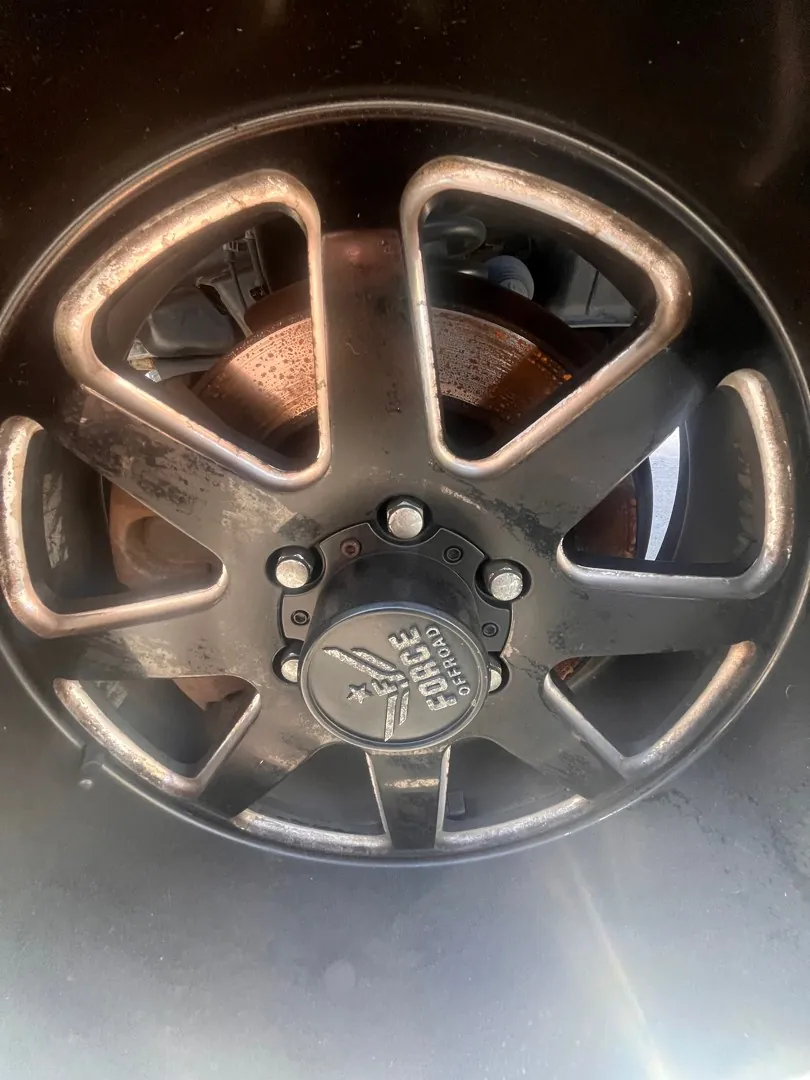
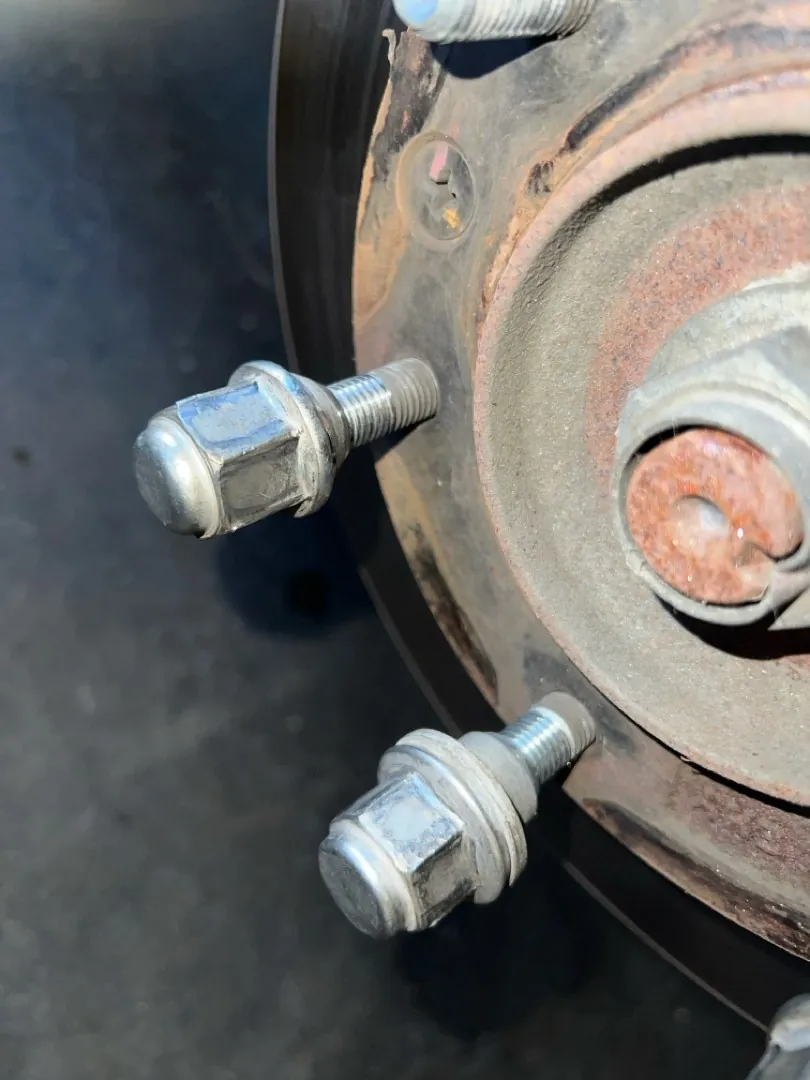
- Look at the lug studs. Salt rusts them, and the swap is the one time the wheels come off. A stud with heavy scale or bad threads should be replaced before the lug nut goes back on.
- Check the alignment after pothole season. A car that pulls will eat a new set of tires on one edge.
- Call your insurance agent. Ontario's rule does not reach Michigan, but one call tells you if your company offers a discount.
How We Help Before the First Snow
We do not sell tires. We do check the tire pressures on every maintenance visit, and we look underneath at no extra cost, where salt goes after lug studs and brake lines first. Our oil and maintenance and suspension and steering work runs $150 an hour, with a written quote before any part is bought, and the full price list is posted. Salt season starts the same weeks as tire season, so read our road salt car wash schedule next.
Customer Mailbag
Is all weather better than all season tires?
For a Detroit winter, yes. An all weather tire carries the mountain snowflake mark, which means it passed a severe snow test. An all season tire with only M+S did not have to. A true winter tire still stops better on ice, per the Michigan State Police.
Are studded tires legal in Michigan?
Not for most drivers. MCL 257.710 bans metal studs on public roads except for police, ambulances and some rural mail carriers. State rules allow a stud only if it wears pavement at 25 percent or less of a reference studded tire.
When should I put winter tires on in Detroit?
In the first half of November. Detroit's normal November low is 33.9°F, per the National Weather Service, and Michelin says waiting for the first snow is too late.
Can I leave winter tires on all year?
You should not. CAA Quebec found emergency stops could take up to 30 percent longer on winter tires in warm weather. They also wear faster on dry summer roads.
Do I need winter tires if my car has all wheel drive?
Yes, if you want the shorter stop. All wheel drive helps you get moving. Every car already brakes with all four wheels, so the stop on ice comes down to the rubber.
Can I put winter tires on just the front?
No. Consumer Reports says to always use four matching winter tires. Mixed tires leave one end of the car with less grip than the other.
Data Behind This
Michigan State Police, Winter Driving Social Media Toolkit. https://www.michigan.gov/msp/divisions/ohsp/safety-programs/winter-driving/winter-driving-social-media-toolkit
Michelin, Differences in Types of Seasonal Tires, updated July 15, 2026. https://www.michelinman.com/auto/auto-tips-and-advice/tire-buying-guide/differences-in-types-of-seasonal-tires
Lise Fournier and Carl Bélanger, Ministère des Transports du Québec, A new measure making winter tires mandatory in Québec, 2010. http://www.tac-atc.ca/wp-content/uploads/fournier-e.pdf
National Weather Service Detroit, Monthly Normals 1991 to 2020. https://www.weather.gov/dtx/monthlynormals
Guide Auto Web and CAA Quebec, Beware winter tires in summer, May 13, 2009. https://guideautoweb.com/en/articles/4424/tests-by-caa-quebec-beware-winter-tires-in-summer
The Globe and Mail, Do winter tires have to be on by a certain date to get the insurance discount, November 16, 2025. https://www.theglobeandmail.com/drive/culture/article-do-winter-tires-have-to-be-on-by-a-certain-date-to-get-the-insurance/
Michigan Legislature, MCL 257.710. https://www.legislature.mi.gov/Laws/MCL?objectName=mcl-257-710
Michigan Administrative Code R 247.174, via Cornell LII. https://www.law.cornell.edu/regulations/michigan/Mich-Admin-Code-R-247-174
Michigan Administrative Code R 247.175, via Cornell LII. https://www.law.cornell.edu/regulations/michigan/Mich-Admin-Code-R-247-175
Consumer Reports, Winter and Snow Tires vs. All Season Tires, November 10, 2017. https://www.consumerreports.org/tires/winter-snow-vs-all-season-tires-comparison
Tell us what the car is doing
Text a photo and your location. You get a real answer from a real person, whatever the hour, and a written quote before anybody touches anything.